
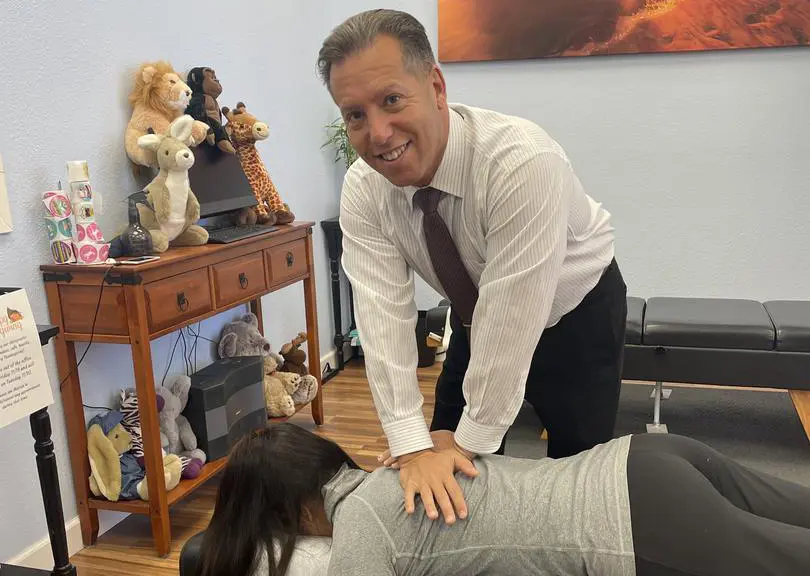
Spinal Adjustment in Los Gatos
If your neck or back feels “stuck,” achy, or just not moving like it should, a spinal adjustment can be a simple, natural next step.
At On Purpose Los Gatos Chiropractic, Dr. Adam Kleinberg, DC provides precise, patient-centered spinal adjustment in Los Gatos to help reduce irritation, restore motion, and support better function. He explains everything clearly, keeps the approach comfortable, and builds care around your body and goals, not a one-size plan.
There’s no guessing. No cookie-cutter care. Your plan is built around your symptoms, your movement, and your goals. Call (408) 320-6022 to schedule your consultation.
What Is a Spinal Adjustment?
A spinal adjustment (also called spinal manipulation) is a therapeutic technique where a licensed chiropractor uses their hands or a small instrument to improve motion in a restricted spinal joint and reduce stress on surrounding nerves and tissues . At its core, it is about restoring healthier movement and alignment so your body can function better.
Dr. Kleinberg often describes chiropractic through a nervous-system lens. If the brain is the “source” and the nerves are the “hose,” then restricted spinal joints can act like pressure on that hose, reducing how well signals get through. In his view, adjusting is a way to remove that interference so your body’s own “innate intelligence” can do what it is designed to do.
Adjustments can be hands-on, lower-force, instrument-assisted, targeted to a specific region, or full-spine depending on what you need. Chiropractic care is also commonly used alongside traditional medical care, not as a replacement, especially when you need imaging, referrals, or co-management.
Why Do People Need Spinal Adjustments?
People come in for spinal adjustments for a lot of reasons, but the common thread is function. Some are dealing with obvious pain like low back flare-ups, stiff necks, headaches, or sciatica symptoms. Others feel “off,” like their posture is collapsing, their mobility is limited, or their body is working harder than it should for everyday things.
Dr. Kleinberg talks a lot about spinal “physics.” When the spine loses its normal curves and balanced motion, certain joints and discs end up carrying too much pressure for too long. Over time, that can contribute to joint wear, disc stress, and irritation where nerves exit the spine. In his words, it is often not just aging, it is mechanics.
Some patients also pursue chiropractic care for wellness goals like better movement, improved posture, and staying active without relying on heavy medication. The goal is not a quick band-aid. It is to restore motion, reduce pressure on the nervous system, and help you hold onto function long term.
What Happens During a Spinal Adjustment?
A spinal adjustment visit starts with making sure you are a good candidate. Dr. Kleinberg reviews your health history, asks how your symptoms affect your life, and performs an exam that checks posture, movement, and how your joints and nerves are functioning. When appropriate, he uses digital X-rays to better understand spinal alignment, curves, and joint spacing, so the adjustment plan is based on structure, not guessing.
During the adjustment itself, you usually lie on a specialized chiropractic table. The chiropractor then applies a quick, controlled force to a specific joint to restore motion . Depending on your needs, Dr. Kleinberg may use hands-on adjustments, a drop-table technique for a lower-force correction, a seated neck adjustment, or a gentle instrument-assisted method.
Many patients hear a “pop.” That sound is typically gas releasing from the joint, similar to cracking knuckles, and it is usually painless . Afterward, it is normal to feel looser, lighter, or more mobile. Some people feel mild soreness, like after a workout, which often improves within a day or two . You may also get simple at-home advice on posture, walking, hydration, or basic exercises to help hold the changes.
Benefits of Spinal Adjustments
Most people pursue spinal adjustments because they want relief and better movement, and those are realistic goals in many cases. Adjustments can help reduce pain, improve range of motion, and support better posture by restoring healthier joint mechanics .
Patients also often notice secondary benefits like easier sleep, less stiffness when getting up, and fewer tension-type headaches when the upper spine and neck are moving better . Dr. Kleinberg’s approach stays focused on nervous system function. His view is that when you reduce pressure and irritation along the spine, the body can coordinate healing and performance more effectively.
From an evidence standpoint, systematic reviews suggest spinal manipulation is a viable option for certain types of low back pain and neck pain . Results vary based on your condition, how long it has been present, and how consistent you are with your plan. Chiropractic care works best when it is personalized, paced appropriately, and paired with practical lifestyle support.
Long‑Term Wellness & Lifestyle Support
Spinal adjustments are not only about getting you through a flare-up. Many patients choose ongoing care because they like how their body functions when their spine moves well. Long-term, better joint motion can help reduce the cycle of stiffness, compensation, and repeated strain.
In Dr. Kleinberg’s practice, wellness care often includes simple guidance on posture, desk setup, phone habits, walking, and home tools that support spinal curves. The goal is to keep the “physics” of your spine working in your favor so you are not constantly rebuilding the same problem. When you combine periodic adjustments with smarter daily habits, you give your body more consistent support for mobility, concentration, and overall resilience.
Case Studies
Case 1: Severe low back pain and loss of function
A woman in her early 60s came in unable to stand upright, with intense low back pain and major limitation in daily life. Her evaluation showed significant degenerative change and poor lumbar mechanics. Dr. Kleinberg recommended a structured plan with frequent adjustments and supportive in-office therapy based on her findings. Over the following months, her pain steadily decreased and her movement improved. She returned to activities she had stopped doing, including hiking and yoga, and later chose maintenance care to help protect her progress and keep her spine moving well.
Case 2: Sciatic leg pain affecting walking and daily plans
A man in his early 70s arrived with severe sciatic pain and difficulty walking after trying multiple medical approaches. His care plan focused on improving spinal mechanics with regular adjustments and addressing disc and nerve-related pressure conservatively. Over several months of consistent care, he reported major functional improvement and was able to get back to normal life activities he had missed, including travel and playing golf. He also used simple home strategies like walking within tolerance and avoiding heavy lifting during flare-ups.
Case 3: Gentle care for a child with tension and sleep struggles
A parent brought in an infant who seemed uncomfortable and struggled with sleep. Dr. Kleinberg used a very gentle, age-appropriate approach, using light fingertip pressure rather than forceful movements. The family reported improved comfort and calmer sleep patterns after care began. While every child is different, the case highlighted how chiropractic methods can be adapted safely based on age, size, and individual needs, with careful screening and conservative technique selection.
Book An Appointment
FAQs
What is spinal manipulation, and is it the same as an adjustment?
Spinal manipulation is a general term often used for chiropractic adjustments. It refers to a controlled motion applied to a joint to restore movement and reduce irritation . Some chiropractors use hands-on methods, others use lower-force instruments. The goal is the same: improve joint motion and support function.
Does the adjustment hurt?
Most adjustments are not painful. Patients often feel a quick pressure and then relief. The popping sound is typically gas releasing from the joint and is usually painless . If an area is inflamed or very tight, you might feel tenderness, but technique and force can be modified to stay comfortable.
How many sessions will I need?
It depends on your condition, how long it has been present, and your goals. Some people notice changes within a few visits, like easier movement or less stiffness. Structural correction and longer-term stability usually take more time. Dr. Kleinberg reviews findings and outlines a clear plan with milestones so you know what to expect.
Are there risks or side effects?
Like any physical treatment, mild side effects can happen. The most common is temporary soreness, similar to post-workout stiffness, that typically improves quickly . Serious complications are uncommon when care is provided by a licensed chiropractor who screens appropriately and uses the right technique for the patient.
Is chiropractic safe for children and seniors?
Chiropractic techniques can be adapted by age and body type. For infants and children, the force is extremely gentle, often fingertip-level. For seniors, especially those with osteoporosis or complex histories, chiropractors use lower-force methods and careful screening. The approach should always be individualized, not standardized.
Do you take X-rays before adjusting?
Not always, but Dr. Kleinberg commonly uses digital X-rays when appropriate to better understand spinal alignment, curves, and joint spacing. X-rays do not show discs directly, but they help guide a more precise plan, especially in long-standing or complex cases. If advanced imaging like MRI is needed, that is typically coordinated through a referral.