
Arm and Leg Pain Treatment Los Gatos
At On Purpose Los Gatos Chiropractic, we know arm and leg pain can make everyday life way harder than it needs to be. Dr. Adam Kleinberg, DC, focuses on finding the actual root cause of your pain, not just numbing it. With 25 years of experience in multiple countries, he uses detailed exams, full-spine digital X‑rays, and gentle chiropractic adjustments to restore better mechanics and ease pressure on irritated nerves. Arm and leg pain can make simple things like a chore. These areas are loaded with joints, nerves, and soft tissues, so when something is off, it can show up fast.
At On Purpose Los Gatos Chiropractic, we take a complete, non‑invasive approach. Dr. Kleinberg looks at your spine, hips, posture, and gait to see how everything is working together, then builds a personalized plan aimed at lasting arm and leg pain relief in Los Gatos.
Common Causes of Arm and Leg Pain
Arm and leg pain can hit suddenly after one wrong move or slowly build over months or years. Dr. Kleinberg often traces it back to the spine and nerve system, especially when symptoms travel down the arm or leg.
Some common causes include:
- Misaligned vertebrae irritating nerve roots in the neck or low back
- Sciatica, where pain runs from the buttock into the leg, sometimes into the feet and toes
- Disc problems, like bulging or herniated discs that press on nerves and create radiating pain into the arms or legs
- Shoulder or hip joint irritation that changes how you move
- Repetitive strain and overuse from sports, work, or long hours at a desk
- Arthritis or joint degeneration that makes movement stiff and painful
Referred pain is huge. Nerves in the neck can create arm pain, tingling, or weakness. Nerves in the low back can cause leg pain, numbness, or changes in bowel and bladder function when things get serious. Chiropractic care aims to improve joint alignment and mechanics so those nerves are not under constant fire.
Clinical research also shows that when chronic low back related leg pain is treated with a mix of spinal manipulation, exercise, and standard medical care, many people see meaningful drops in pain, leg symptoms, and disability that can last for at least 12 months. These results are averages, not guarantees, but they support a multimodal, team-based approach.
Evaluation and Diagnosis at On Purpose Los Gatos Chiropractic
Your first visit is all about figuring out why your arm or leg hurts, not just where.
A typical assessment includes:
- A relaxed consultation to talk through your history, injuries, and daily habits
- Postural analysis to see if your head, shoulders, and hips are level or rotated
- Leg-length checks and bilateral scales to see how your weight is distributed from side to side
- Range of motion testing for your spine and involved joints
- Palpation, where Dr. Kleinberg feels along the spine and extremity joints for restrictions and tender spots
- Basic neurological checks if there is numbness, tingling, or weakness
In most cases he takes full-spine digital X‑rays, front and side views, to check the curves, alignment, and disc spaces. If you already have an MRI for disc issues or severe radiating pain, he will review the report and images with you. When red-flag symptoms are present, like sudden severe weakness, loss of bladder or bowel control, or rapidly worsening neurological signs, he will recommend immediate medical evaluation.
All of this feeds into a clear explanation: what is going on, how it likely developed, what he recommends, how long it may take, and what it will cost.
Chiropractic Treatment for Arm and Leg Pain
Dr. Kleinberg is what he calls a “pretty straight chiropractor.” He adjusts the spine and does it very well, then adds in extremity work when joint mechanics in the shoulder, elbow, wrist, hip, knee, or ankle are part of the problem.
Your care may include:
- Spinal adjustments to reduce pressure on irritated nerves in the neck or low back
- Extremity adjustments for shoulders, elbows, wrists, hips, knees, and ankles when the problem is joint‑based rather than purely muscular
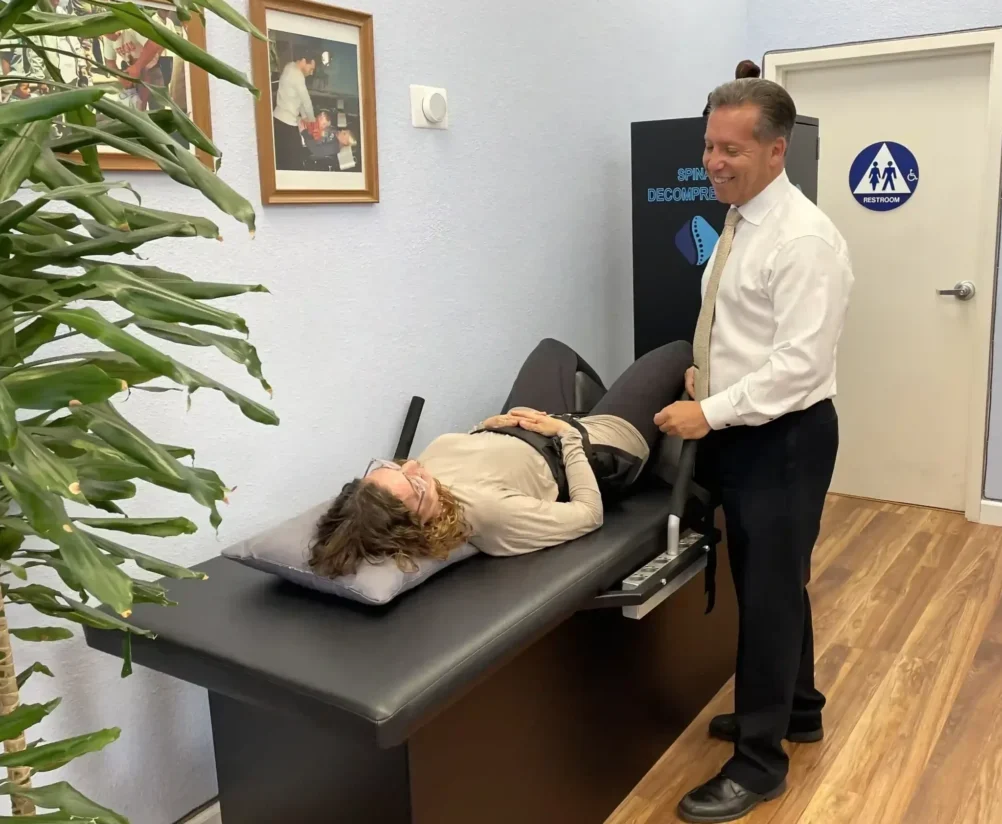
- Spinal decompression therapy for disc‑related leg pain or sciatica, using a specific pull–release pattern that gently “pumps” the discs and helps create a vacuum effect for rehydration over time
- Soft, hands‑on work around stiff joints as needed
- Simple home stretching, posture coaching, and activity tweaks so you are not undoing the adjustment as soon as you leave
For many people with chronic low back related leg pain, research suggests that combining spinal manipulative therapy (SMT), exercise, and standard medical care can lead to significantly better pain and disability scores than exercise and medical care alone, with benefits still seen at 12‑month follow up. Clinical guidelines also recommend SMT as part of the options for acute and chronic low back pain with or without leg pain.
Results are individual. Chiropractic is a non‑invasive, medication‑free approach that can often complement the care you are already getting from your medical team.
Expected Timeline and Results
Timelines are different for everyone, but here is the general pattern Dr. Kleinberg sees:
- Many patients notice some change in pain, tightness, or mobility within the first few weeks
- Chronic issues or long‑standing sciatica often need a structured plan, not random drop‑ins
For disc‑related leg pain or stubborn sciatica, he usually starts with a two‑month combination plan of chiropractic adjustments plus decompression, three visits per week, with progress checks every 12 visits.
Clinical studies on chronic low back related leg pain suggest that about 12 weeks of SMT plus exercise can lead to significant reductions in pain and disability for many people. That is a helpful benchmark, but not a promise. At your report visit, Dr. Kleinberg will walk you through what he realistically expects for your specific case.
Equipment & Tools Used
To deliver precise, comfortable care for arm and leg pain, On Purpose Los Gatos Chiropractic uses:
- Chiropractic adjusting tables that allow for different positions, including drop pieces and seated work when needed
- A DRX 91000 spinal decompression table, which uses controlled cycles of gentle pull and release to “pump” the discs and help rehydrate them over time
- Digital full‑spine X‑ray for clear views of your curves, alignment, and disc spaces
- A handheld activator instrument, available for very gentle, low‑force adjustments when appropriate
These tools support the main event, which is a precise chiropractic adjustment aimed at improving the physics of your spine and extremity joints so your nervous system can do its job with less interference.
Case Studies
A 71‑year‑old patient came in barely able to walk. He had seen “every doctor,” had severe sciatica down one leg and milder pain in the other, and had even had epoxy injected into a vertebra to stabilize it, so there was literally “concrete” in his spine by the time he arrived. His main goal was simple. He wanted to move again without feeling miserable.
X‑rays showed significant degeneration and disc compression. Dr. Kleinberg recommended a combination plan of chiropractic adjustments and spinal decompression, three times per week. Over the next three to four months, the patient gradually shifted from shuffling to standing taller and walking more comfortably. By the end of that phase, he was back to going on a cruise with his wife and playing golf again.
This is one person’s experience. Individual results vary, but it shows what can happen when you address nerve pressure and biomechanics instead of only chasing symptoms.
Why Choose On Purpose Los Gatos Chiropractic
People choose On Purpose Los Gatos Chiropractic for arm and leg pain relief in Los Gatos because of a mix of experience, depth of evaluation, and genuine care.
- 25 years in practice across six countries, from Park Avenue to Jakarta
- Nearly every patient receives full‑spine digital X‑rays so care is based on real structure, not guesswork
- Focus on the physics of the spine and spinal correction, not just short‑term pain care
- Ability to adjust extremity joints when shoulder, elbow, wrist, hip, knee, or ankle mechanics are part of the problem
- Warm, small‑clinic vibe with deep, long‑term patient relationships and a strong emphasis on education
Dr. Kleinberg often tells new patients, “You can only utilize something to the level that you understand.” He makes sure you understand what is going on and how your plan is designed to help.
Book An Appointment
FAQs
1. How does chiropractic help arm or leg pain?
Chiropractic care looks at how your spine and joints are aligned and how well your nervous system can send messages out to your arms and legs. Misaligned vertebrae or joints can put pressure on nerves, leading to pain, tingling, or weakness. Adjustments work to relieve that pressure and improve joint mechanics. For leg pain linked to low back issues, adding spinal manipulative therapy and exercise to standard care has been shown in research to reduce pain and disability for many patients, especially over a few months of consistent care.
2. Is chiropractic safe for radiating pain into the arm or leg?
When performed by a trained chiropractor after a proper evaluation, chiropractic care is generally considered safe. Dr. Kleinberg has delivered hundreds of thousands of adjustments over 25 years, with very few complications. Clinical guidelines recommend spinal manipulative therapy for acute and chronic low back pain, with or without leg pain, either alone or as part of a multimodal plan. That said, safety always depends on ruling out red flags and avoiding techniques that do not fit your condition. Sudden severe weakness, loss of bladder or bowel control, or major trauma always needs urgent medical attention.
3. How many sessions will I need?
There is no one-size answer. The number of visits depends on how long you have had the problem, how intense it is, what your X‑rays show, and how your body responds. Many patients with leg pain related to low back issues start with a two‑month combination plan of chiropractic and decompression or a three‑month corrective chiropractic plan, often three times per week with progress checks. Chronic or advanced cases may need longer. Dr. Kleinberg will outline a clear plan and revisit it as you go.
4. What if my pain is caused by a pinched nerve?
“Pinched nerves” often come from misaligned vertebrae, disc changes, or tight spaces where nerves exit the spine. Chiropractic adjustments and, when appropriate, decompression therapy aim to reduce that pressure and improve spacing and motion. For arm pain, this may involve working on the neck and upper back. For leg pain, the focus is usually the low back and pelvis. If your symptoms do not improve as expected, or if they worsen, additional imaging or referral to another specialist may be recommended.
5. Can chiropractic help shoulder impingement or bursitis?
Shoulder pain is one of the most common non‑spine complaints in primary care. Early research, including a small case series, suggests that a multimodal chiropractic approach combining soft tissue therapy, joint manipulation, and specific exercises can improve shoulder impingement symptoms and restore function for some patients. This evidence is preliminary and based on a small group, so more research is needed. In practice, Dr. Kleinberg evaluates whether your shoulder problem is joint‑based, posture‑related, or mainly soft tissue, then decides whether chiropractic, co‑management, or referral makes the most sense.
