
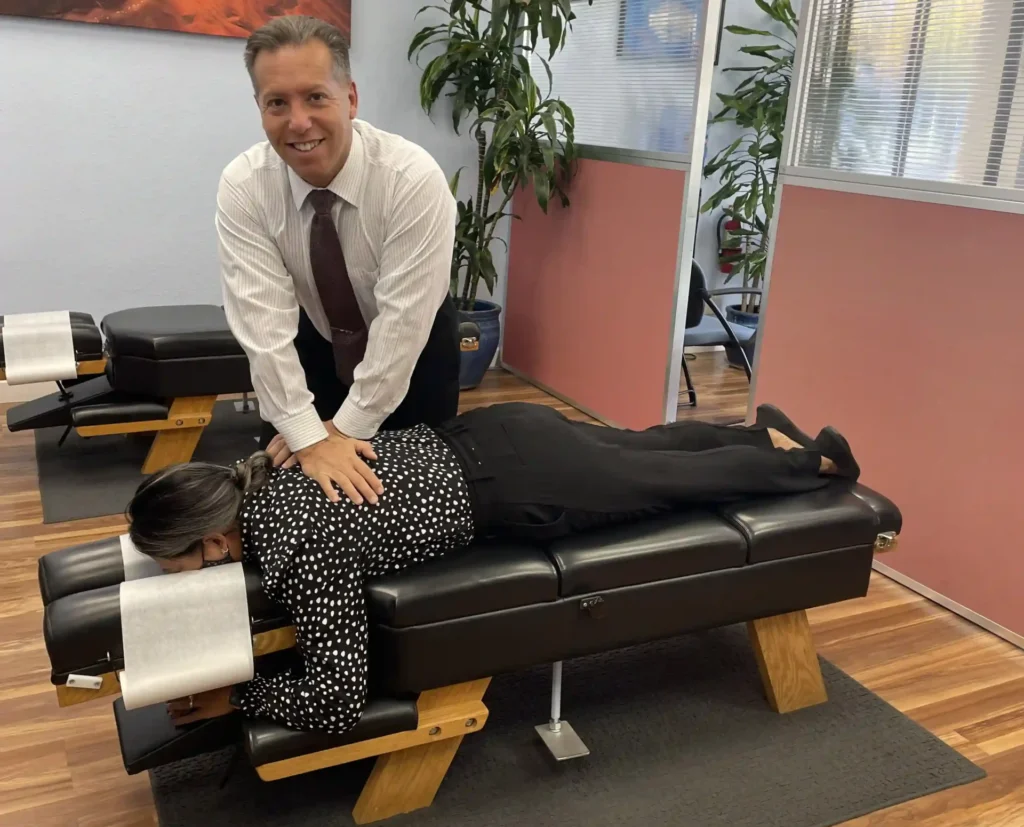
Scoliosis Treatment in Los Gatos
At On Purpose Los Gatos Chiropractic, Dr. Adam Kleinberg, DC, provides non‑invasive scoliosis care in Los Gatos for people who want to feel better without jumping straight to surgery.
Scoliosis is an abnormal sideways curve in the spine that can change posture and comfort. In our clinic, care blends gentle chiropractic adjustments, mobility work, and scoliosis exercises to support function.
Chiropractic offers a conservative, medication-free, and supportive approach to help your spine and nervous system work as well as possible.
Dr. Kleinberg focuses on the physics of your spine, using full‑spine digital X‑rays when appropriate to map out a plan. If scoliosis is on your radar, you can schedule a focused evaluation to talk through options.
Understanding Scoliosis
Technically, scoliosis is a lateral, or sideways, curvature of the spine of more than ten degrees, often with some rotation of the vertebrae. Many childhood curves are called idiopathic, which basically means “we do not fully know why this one showed up.” Others are linked to congenital changes in the bones, neuromuscular conditions, or, in adults, years of disc and joint degeneration that slowly tip the spine.
In Dr. Kleinberg’s world, it comes back to physics. When certain areas of the spine lose their ideal curves or stability, other segments start bending and twisting to keep you upright. As a chiropractor for scoliosis, he does not claim to magically straighten every curve. The focus is on function, comfort, and slowing or easing progression where possible, especially in mild to moderate cases.
Scoliosis can show up quietly or be obvious at a glance. For some people it is first spotted during a school screening or sports physical. For others it is discovered later in life when back pain, fatigue, or posture changes finally get checked. In our Los Gatos office, we see both adolescents with idiopathic curves and adults who have developed scoliosis as part of long‑term wear and tear. A curved spine can cause one shoulder or hip to sit higher, ribs to rotate, and muscles on one side to work overtime. The goal of scoliosis treatment in Los Gatos here is to help your spine move better, reduce tension, and support the best balance your body can achieve.
Common Scoliosis Symptoms
Scoliosis symptoms can range from barely noticeable to seriously disruptive. Common signs include:
- Uneven shoulders or hips, or clothes that never seem to hang straight.
- One shoulder blade that sticks out more than the other.
- A visible rib bump or one side of the back looking higher when you bend forward.
- Posture that looks “off,” with the head not centered over the pelvis.
- Local back or neck pain, especially after sitting or standing for long periods.
- Muscle tightness or fatigue on one side of the body.
- In some adults, radiating arm or leg symptoms when curves affect nerve spaces.
The only way to truly understand your curve is with a proper evaluation and, when appropriate, imaging.
Treatment Approach for Spinal Curves
In this clinic, every scoliosis plan starts with a detailed consult, posture check, weight‑distribution testing, and full‑spine digital X‑rays so we can actually see your curves, not just guess from the outside. From there, Dr. Kleinberg designs a care plan based on your age, curve pattern, symptoms, and goals.
Most plans center on gentle, specific chiropractic adjustments along the entire spine to improve segmental motion and the overall physics of how you carry weight. For many teens and adults, care also includes scoliosis‑friendly exercises to strengthen the core and support muscles that stabilize your curves, plus coaching on how to sit, stand, and move so you are not constantly feeding the problem. In some cases, he will co‑manage with medical providers or discuss bracing or imaging follow‑up when curves are more advanced. The goal of this non‑invasive scoliosis care is realistic. Better mobility, less tension, and a spine that works closer to how it was designed.
Timeline for Scoliosis Improvement
Timelines with scoliosis are individual. Dr. Kleinberg usually thinks in phases, not quick fixes. Many patients notice changes in comfort or posture within the first few weeks as the spine starts moving differently.
For structural curves, he often recommends a three‑month corrective chiropractic plan with regular progress checks and follow‑up X‑rays to track how your spine is adapting. Others, especially in younger patients, may show measurable changes in alignment over time, while adults may aim more for function and slowing further breakdown.
How fast you respond depends on your age, how long the curve has been present, its severity, and how consistent you are with visits and home advice. No responsible chiropractor for scoliosis will promise a perfectly straight spine, but many can help you feel and move better.
Book An Appointment
FAQs - scoliosis Treatment
Is chiropractic treatment good for scoliosis?
For many people with mild to moderate curves, chiropractic can be a helpful part of scoliosis care. Adjustments aim to improve how individual spinal segments move and how your body distributes weight, which can ease muscle tension and support better function. It does not replace medical monitoring, especially for growing kids or significant curves, but it can complement other recommendations and give you tools to manage stiffness and discomfort day to day.
Can scoliosis be corrected naturally?
It depends what you mean by corrected. Structural curves in the bones are not usually “undone,” especially in adults, but many people can see improvements in posture, mobility, and symptoms with non‑invasive scoliosis care. Chiropractic adjustments, targeted exercises, and posture changes can help your body work with the curve more efficiently. In kids and teens, early detection and consistent follow‑up are key. The goal is realistic improvement, not chasing a perfectly straight spine.
What happens if scoliosis is left untreated?
Not every scoliosis case becomes severe, but ignoring a meaningful curve can allow more stiffness, muscle imbalance, and disc or joint stress to build over time. Some people notice increasing fatigue when sitting or standing, more frequent back pain, or changes in how they walk and breathe. Regular monitoring and early, conservative care can help you stay ahead of those changes. If a curve is progressing quickly, medical and surgical opinions should also be part of the conversation.
